

Connecting Internal Systems with HYBot AI Powered Process Automation
Introduction
Organizations often use several different software systems to manage daily operations. CRM handles customers, ERP manages resources, accounting systems track finance, and warehouse tools monitor inventory. While each system works well independently, they rarely communicate smoothly with each other. Employees must transfer data manually, check reports, and verify consistency. This process wastes time and increases the risk of errors.
Connecting Internal Systems with HYBot changes everything. HYBot creates a bridge between these platforms and automates workflows across them using artificial intelligence. It helps organizations run faster, smarter, and with less human intervention.
(Internal link suggestion: Explore how automation transforms workflows)
1. The problem of disconnected systems
In many companies, different departments use separate tools that do not share information. Sales teams work in CRM, operations use ERP, and finance relies on accounting software. Each system stores important data but cannot easily talk to the others.
For example:
- When a new customer is added to CRM, the same data must be re-entered in the billing system.
- When inventory changes in the warehouse, ERP updates may take days.
- When an invoice is paid, accounting does not automatically reflect it in sales reports.
These gaps create inefficiency and confusion. Data becomes inconsistent, decisions are delayed, and employees spend hours repeating the same actions.
2. HYBot as an intelligent bridge
HYBot solves this challenge by using AI automation between CRM and ERP systems. Instead of creating fragile manual integrations, it interprets information intelligently.
For example, when a sales order is confirmed in CRM, HYBot automatically checks inventory in the warehouse, updates ERP, and generates the corresponding invoice in the accounting system. If any data is missing, the AI identifies the issue and notifies the responsible person.
This creates a seamless flow of information without complex programming.
(Internal link suggestion: Learn more about HYBot for automation
)
3. How HYBot automation works
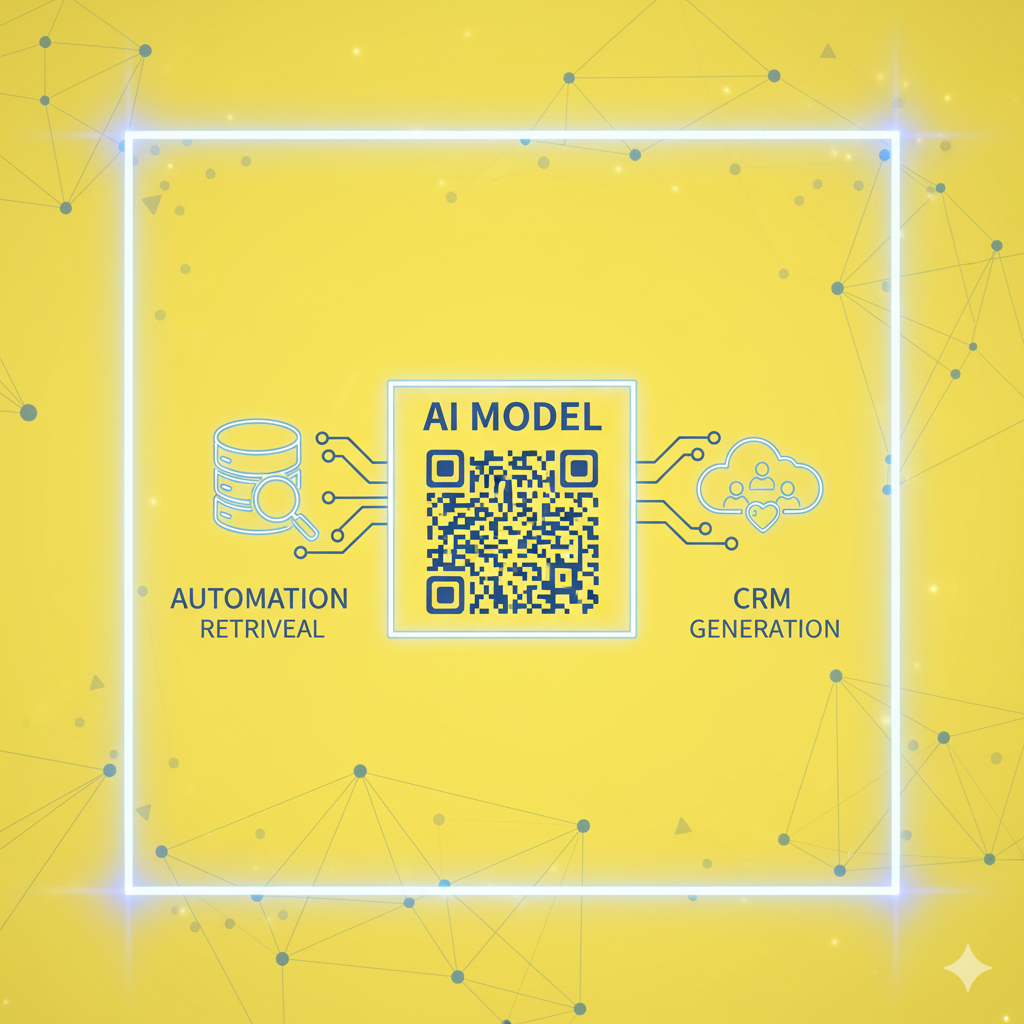
HYBot uses a combination of workflow automation and Retrieval Augmented Generation (RAG). When a process involves reading or interpreting documents, RAG retrieves relevant information and feeds it into the workflow.
For instance, if an order confirmation requires product specifications or pricing rules, HYBot retrieves those details from the company’s documentation before processing the order. This ensures accuracy and compliance across systems.
Each action is authenticated under Zero Trust principles, meaning no connection or command runs without verification.
4. Connecting CRM and ERP
Customer Relationship Management (CRM) systems and Enterprise Resource Planning (ERP) systems are the backbone of most businesses. Yet they often work separately.
With HYBot, both can operate in harmony. When a customer order is created in CRM, the AI sends the necessary data to ERP to check stock, delivery time, and purchase costs. When ERP updates inventory or changes pricing, HYBot synchronizes the information back to CRM.
This eliminates manual data entry and guarantees that sales teams always see accurate, up-to-date information.
5. Accounting integration
Financial operations depend on data accuracy. Even small discrepancies between sales records and accounting reports can cause problems. HYBot automates this synchronization.
When a sale is closed, HYBot automatically generates an invoice in the accounting system. When payment is received, the transaction is recorded and reconciled with CRM.
For recurring invoices or subscriptions, HYBot can send reminders, generate PDFs, and even forward them through email or chat platforms such as WhatsApp or Telegram.
This complete financial loop improves transparency and reduces administrative workload.
(Internal link suggestion: Discover automation in financial processes)
6. Warehouse and inventory connection
Inventory management is another area where automation brings major efficiency. Warehouse systems track quantities, locations, and product movements, but updates often lag behind other platforms.
HYBot monitors these changes and keeps all systems aligned. When an item is sold, the AI adjusts stock levels instantly. When new shipments arrive, ERP and CRM are updated simultaneously.
Managers can ask the AI questions like:
- “Which items are low in stock?”
- “Has the new delivery arrived?”
- “How many orders are waiting for dispatch?”
HYBot answers by retrieving real-time data across multiple systems.
7. Multi-platform communication
HYBot integrates with popular communication tools to make automation even more interactive. When important events occur, such as a high-value order or a stock shortage, HYBot can notify teams via Slack, Microsoft Teams, or Telegram.
Users can also trigger actions directly from chat. For example, sending the message “Generate weekly sales report” can prompt HYBot to collect the data, create the report, and deliver it within seconds.
This kind of integration turns everyday communication into an automation command center.
8. Automating repetitive cross-system tasks
Some workflows happen across multiple platforms every day. Examples include:
- Generating purchase orders when stock reaches a threshold
- Updating supplier information in both ERP and CRM
- Checking payment status before approving delivery
- Sending order confirmations with attached documents
- Backing up invoices and receipts automatically
HYBot handles these repetitive actions reliably, freeing employees from routine work.
9. Data consistency and accuracy
One of the biggest benefits of Connecting Internal Systems with HYBot is data consistency. When every system communicates through a central AI assistant, there is no risk of conflicting information.
HYBot validates each entry, detects missing values, and corrects mismatches automatically. If a discrepancy arises, it alerts the right user. This ensures all departments rely on the same source of truth.
(Internal link suggestion: Read about improving data quality with HYBot)
10. Role-based access and security
Since HYBot operates under Zero Trust architecture, every action requires authentication. Users have specific permissions that define what they can access or modify.
For example, sales staff can trigger invoice creation but not alter accounting data. Warehouse employees can update stock but cannot view customer payment information.
This granular access control keeps automation secure while still maintaining flexibility.
11. Example scenario: a complete sales workflow
Let us look at a real-life example of automation in action.
- A sales representative enters a new order in CRM.
- HYBot checks ERP to confirm stock availability.
- If stock is sufficient, HYBot triggers the accounting system to generate an invoice.
- Warehouse staff receive automatic instructions for packaging and dispatch.
- Once the product is shipped, HYBot updates delivery status in CRM.
- When payment is received, HYBot closes the order and archives the documentation.
This end-to-end process runs automatically with minimal human input, ensuring speed and accuracy.
12. Benefits for every department
- Sales: Real-time updates and faster quotation processing
- Accounting: Error-free financial records and instant reporting
- Warehouse: Accurate stock monitoring and reduced shortages
- Management: Complete visibility and reliable analytics
Everyone benefits from connected data and smoother workflows.
13. No-code automation setup
Setting up automation with HYBot is straightforward. The system includes a no-code configuration panel where users can define workflows by selecting triggers and actions.
For instance, users can choose “When new customer added to CRM” as a trigger, and “Create profile in ERP” as the action. The interface guides users step by step without any coding knowledge.
This accessibility allows every department to participate in automation initiatives, not just IT teams.
(Internal link suggestion: Get started with HYBot automation)
14. Monitoring and analytics
HYBot includes dashboards that display automation performance. Managers can monitor how many workflows ran, what data was exchanged, and where improvements are possible.
Analytics also reveal how long manual processes used to take compared to automated ones. The results often show dramatic time savings and fewer mistakes.
This transparency helps justify investment and ensures continuous improvement.
15. Scalability and flexibility
As businesses grow, their systems expand. HYBot scales effortlessly, connecting additional software without redesigning existing workflows. Whether you introduce a new CRM or migrate your accounting platform, HYBot adapts automatically.
Its modular design makes integration flexible while keeping operations consistent.
16. Compliance and auditing
Every automated action in HYBot is logged with timestamp, user identity, and context. This ensures full traceability and compliance with industry regulations.
Auditors can review any workflow and confirm who triggered it, when it ran, and what data it affected. Such transparency is essential for companies operating in regulated sectors like finance or healthcare.
17. The business impact
Organizations using HYBot experience:
- Faster data synchronization
- Fewer manual errors
- Shorter decision cycles
- Higher employee satisfaction
- Lower operational costs
By connecting systems and automating routine work, companies gain a competitive edge and focus on innovation.
(Internal link suggestion: See more case studies of automation success)
18. Implementation roadmap
Deploying HYBot for integration follows simple steps:
- Map the systems that need connection (CRM, ERP, accounting, warehouse).
- Define key workflows and approval rules.
- Upload relevant documentation and datasets.
- Configure access control.
- Launch automation and monitor results.
Most organizations complete these steps within a week and immediately start benefiting from seamless communication between platforms.
19. Future outlook
The future of enterprise automation lies in intelligent orchestration. HYBot is continuously evolving to support predictive operations. Soon, it will be able to detect patterns and suggest new automation rules automatically.
For example, if sales repeatedly trigger similar workflows, HYBot will recommend optimizing them into a single unified process. This learning ability keeps automation adaptive and future-ready.
Conclusion
Connecting Internal Systems with HYBot is the most efficient way to unify business tools and automate operations. By bridging CRM, ERP, accounting, and warehouse platforms through AI, organizations eliminate manual effort, improve accuracy, and speed up decision-making.
HYBot combines RAG intelligence, workflow automation, and Zero Trust security to ensure that information flows smoothly and safely across the enterprise. The result is a connected, intelligent, and highly productive organization.
To discover how HYBot can modernize your internal processes, visit hyperict.fi/blog
or hyper-ict.com/blog
Hyper ICT X, LinkedIn, Instagram
- Miad Dadbin
- 2025-11-12
- 8:00 am
- 0 comments